
APPLICATION

Railway signal
All
  • All
  • Product Management

Railway signal equipment plays a crucial role in train safety. In order to ensure the normal operation of ground signal equipment, protection measures must be taken for railway signal equipment, among which signal power protection is the most important. In order to ensure the normal operation of railway signal equipment by railway signal power supply, a graded protection method must be adopted for the protection of railway signal power supply. Railway signal circuit breakers have significant functions such as reusability and delayed power cut-off, especially hydraulic electromagnetic circuit breakers are more suitable for practical application scenarios. In the early 1990s, traditional glass tube fuses were gradually replaced through trial and promotion, and widely used in the protection of railway signal power equipment.
The South African CBI hydraulic electromagnetic circuit breaker has gradually established its market preferred and leading position in the Chinese railway signal industry due to its resistance to environmental temperature, high quality and safety performance, long service life, and diverse selection, accompanying the high-speed development of Chinese railways for over 30 years. Participated in drafting the railway standard TB/T 3497-2017 "Standard for Hydraulic Electromagnetic Circuit Breakers for Railway Signaling", which is a benchmark for industry products.
South African CBI hydraulic electromagnetic circuit breakers have been providing high-quality products and advanced, reliable, and safe application solutions for railways for decades based on the actual application technology conditions of railway signals. They are widely used in railway signal combination cabinets, train control interlocking cabinets, track circuits, ZPW-2000 series, signal lighting units, outdoor box chokes, intelligent applications, monitoring, axle counting, power supply panels, lightning protection boxes, fully electronic computer interlocking cabinets, and other special occasions. As one of the core components of railway signaling, it has long been trusted by railway design departments, research and development departments, construction departments, and end customers. Its products cover various fields such as national railways, local railways, urban rail transit (subway), and trams.
At the same time, these solutions are also widely used in overseas railway projects, such as Indonesia Yavan High speed Railway, China Thailand Railway, China Laos Railway and Hungary Serbia Railway.
In addition, the electromagnetic interference problem caused by switch EMC noise in railway signal equipment applications, our Blueferrite nanocrystal magnetic ring product, by installing the nanocrystal magnetic core in front of the switch equipment and around the output cable as impedance, reduces the impact of high-frequency current on equipment components, avoids unnecessary maintenance costs, and increases the maximum effective utilization rate of the equipment.

# Railway signal
Combination cabinet

Combination cabinets are a type of signal cabinet located in the mechanical room. They are used for installing relay combinations, power supply combinations, and other electrical components and equipment, and can reflect the operating status of outdoor signals. Y-series circuit breakers are used.
View details →

# Railway signal

CTC interlocking cabinet

To ensure the safety of train operation and shunting operations at railway stations, a mutually restrictive relationship is established between signals, points, and routes through technical means. The equipment that implements this relationship is called interlocking equipment. The train control interlocking cabinet is an indispensable part of the equipment. In addition to ensuring operational safety, interlocking equipment also improves operational efficiency and reduces labor intensity. Y-series circuit breakers are selected.
View details →

# Railway signal

Track circuit, ZPW2000 series

Track circuits consist of rails and rail insulation, used for automatic and continuous detection of train occupancy, and for controlling signaling or switching devices to ensure safe train operation. The entire track network is divided into numerous block sections at appropriate intervals, each separated by rail insulation joints to form an independent track circuit. Each section's starting point has a signal (color light signal). When a train enters a block section, the track circuit immediately reacts and transmits information to the signal that the section is occupied, preventing other trains from entering. The signal at the section entrance then displays a stop signal. Y-series (DC) circuit breakers with two auxiliary contactors and B-series circuit breakers are used.
View details →

# Railway signal

Signal light unit

The power supply is introduced from the combination cabinet to control the display status of the signals, directly issuing train operation commands to the maintenance personnel. The correctness of the display of various signals is directly related to the safety of train operation. Therefore, the signal light circuit must be a safe circuit with strictness and reliability. Because it has cable lines for indoor and outdoor communication, the design of the signal light circuit must have phase-loss protection and cross-wiring protection measures. Y-series circuit breakers are selected.
View details →

# Railway signal

Outdoor box, choke

Outdoor enclosures are used to house railway control equipment, providing protection for stored equipment in various harsh outdoor environments, shielding against electromagnetic interference, and allowing for orderly and neat arrangement of equipment, facilitating future maintenance. Advantages include compact and reasonable layout design, safe and reliable circuit configuration, good performance, and durability. B-series circuit breakers are used.
View details →

# Railway signal

Smart circuit breaker

By integrating and utilizing intelligent systems, the safety of new transportation vehicles is ensured while improving speed. It has also made significant contributions to improving the safe operation of trains. By setting sensors and intelligent devices on the circuit breaker components, leaving a 485 communication interface, real-time monitoring information on the use of the circuit breaker is provided in a timely manner, and timely warnings are issued for potential dangers, preventing problems before they occur. DD-Frame RAU and RMU circuit breakers are selected.
View details →

# Railway signal

Monitoring

The railway monitoring system is an important signaling device that ensures safe train operation, strengthens the management of the connection between signaling equipment, monitors the status of signaling equipment, detects hidden dangers of signaling equipment, analyzes the causes of signaling equipment failures, assists in fault handling, guides on-site maintenance, reflects the quality of equipment use, and improves the maintenance level and efficiency of the electrical department. It is designed, constructed, debugged, accepted, and opened simultaneously with interlocking, blocking, train control, TDCS/CTC, hump and other systems. Y-series circuit breakers are selected.
View details →

# Railway signal

Axis counting

Axle counter, also known as microcomputer axle counter, is equipment installed at railway stations at both ends. It uses closed-loop sensors installed on the rails to monitor the number of wheel pairs passing through. After detection, the number of wheel pairs at this station is sent to the opposite station via a semi-automatic device in the indoor microcomputer system. When the train arrives at the opposite station, if the number of wheel pairs received by the opposite station is the same as that of the departure station, the section will be automatically opened. In other words, it is a railway signaling device that detects the passing of wheels, and it can replace many ordinary track circuits. Y-series circuit breakers are selected.
View details →

# Railway signal

Power screen, lightning protection cabinet

Railway signal power supply screen refers to power supply equipment that uses power electronics technology and has real-time monitoring, alarm, recording, and fault location functions, providing a stable and clean power supply for railway signal loads. The power supply screen cabinet structure consists of three parts: input power distribution unit, module unit, and output power distribution unit. Y-series circuit breakers are selected.
View details →

# Railway signal

All-electronic interlocking cabinet

Computer interlocking in railways is a signaling device that ensures the safety of train and shunting operations within a station and improves the station's throughput capacity. It uses a computer to perform logical operations on the operation commands of station personnel and the information representing the status of on-site equipment, thereby achieving centralized control of signals, points, routes, etc., making them mutually restrictive to ensure the safety of train operations. This is the station interlocking equipment, namely, the microcomputer centralized interlocking. It features fast operation speed, large information volume, convenient operation, high safety, small equipment size and light weight, easy debugging and maintenance, improving the degree of automation and operational efficiency. Y-series circuit breakers, DD-Frame RAU, and RMU circuit breakers are selected.
View details →

# Railway signal

Applications for special occasions

Applications in unattended stations, hazardous locations, equipment requiring leakage protection, and locations with poor station branching, etc. Select DD-Frame RAU, RMU circuit breakers, QF17, B-Frame 2A+10A, 3A+8A
View details →

# Railway signal

Blueferrite nanocrystalline magnetic ring
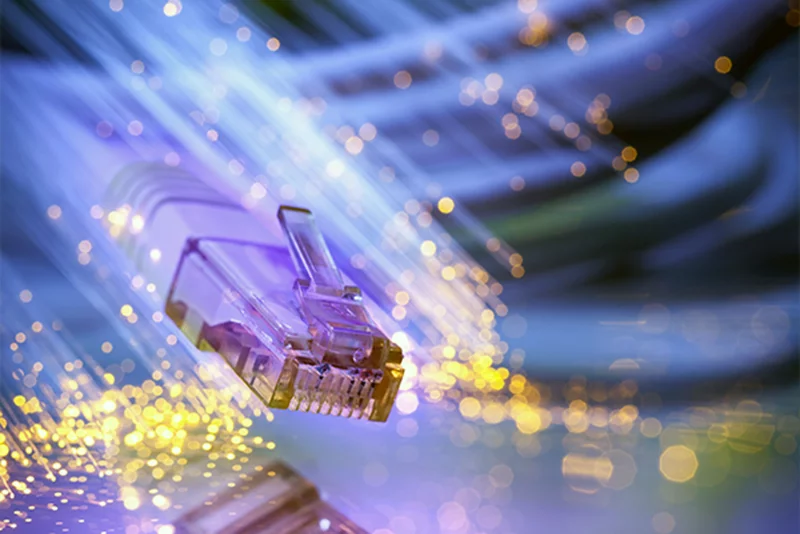
Acting as impedance around the cables installed in front of the switching device and at the output end, reducing the impact of high-frequency currents on the device components, avoiding unnecessary maintenance costs, and increasing the effective utilization rate of the equipment.
View details →

# Railway signal

Expand global reach through reliable railway signaling solutions

Shanghai Dianjie Industrial and Trade Co., Ltd. has established itself as a leader in the railway signaling industry, providing a range of products that ensure the safe and reliable operation of railways. These solutions are widely used in projects both domestically and internationally, from urban rail transit to high-speed rail in countries such as Indonesia, Thailand, and Vietnam. Through participation in the development of industry standards, such as TB/T 3497-2017 Railway Signal Hydraulic Electromagnetic Breaker Standard, the company demonstrates its commitment to innovation and quality. With products certified to international standards such as ISO9001 and CRCC, Shanghai Dianjie continues to support global rail infrastructure with cutting-edge and reliable solutions.
View details →

# Railway signal

Troubleshooting signal system failures using advanced technology

Signaling systems are crucial for the safe and efficient operation of railways. Common signal failures, such as track circuit failures and railway switch failures, can cause significant disruptions. To mitigate these risks, modern signaling solutions incorporate advanced technologies such as uninterruptible power supplies (UPS) and robust insulation systems. Furthermore, the adoption of LED signal lights reduces maintenance requirements and improves visibility. Implementing comprehensive security measures, including monitoring systems, also helps prevent theft of signaling equipment. These measures ensure the continuous and safe operation of railway signaling systems, reducing the likelihood of accidents and delays.
View details →

# Railway signal

Optimize train scheduling and operations using AI technology

Artificial intelligence (AI) plays a significant role in modern railway operations, providing solutions ranging from asset management to real-time traffic control. AI models developed by companies like The Train Brain improve the reliability of public transport by offering precise delay predictions and traffic simulations. These tools process large datasets, including train schedules and GPS data, to optimize train operations and reduce delays. Furthermore, AI solutions assist in railway yard operations, with platforms like Cedar AI enhancing yard efficiency and ensuring compliance with safety regulations. These advancements in AI technology contribute to more efficient and reliable railway services.
View details →

# Railway signal

Integrate train internet of things (IoT) to improve operational efficiency

The concept of train internet of things (IoT) significantly impacts the reliability and safety of railway operations. By leveraging IoT technologies, railway operators can implement condition-based monitoring to prevent delays caused by track and train component failures. This approach optimizes maintenance efficiency, reduces costs, and improves passenger satisfaction. For example, TRAINFO's railway crossing monitoring system utilizes sensors and predictive software to manage railway crossings more effectively, thus reducing traffic delays and enhancing safety. The integration of IoT in railways provides a data-driven approach to fleet control and operational management, paving the way for a smarter and more efficient railway system.
View details →

# Railway signal

Enhance railway safety using predictive maintenance solutions

In recent years, the introduction of autonomous train systems has revolutionized the railway industry, aiming to improve efficiency, reliability, and safety. These systems leverage advanced technologies such as the Internet of Things (IoT), Artificial Intelligence (AI), and real-time data transmission. Autonomous trains are equipped with sophisticated sensors that enable precise control of train operation, including speed, braking, and obstacle detection. For example, Grade of Automation 4 (GoA4) systems autonomously handle emergency situations, ensuring optimal train performance under various conditions. By reducing human error and increasing punctuality, autonomous train systems represent a significant advancement in railway technology, facilitating seamless and safer rail transport.
View details →

# Railway signal

Improving railway efficiency through the implementation of advanced autonomous train systems

In recent years, the introduction of autonomous train systems has revolutionized the railway industry, aiming to improve efficiency, reliability, and safety. These systems leverage advanced technologies such as the Internet of Things (IoT), Artificial Intelligence (AI), and real-time data transmission. Autonomous trains are equipped with sophisticated sensors that enable precise control of train operation, including speed, braking, and obstacle detection. For example, Grade of Automation 4 (GoA4) systems autonomously handle emergency situations, ensuring optimal train performance under various conditions. By reducing human error and increasing punctuality, autonomous train systems represent a significant advancement in railway technology, facilitating seamless and safer rail transport.
View details →
< 1 >